
20 Years Lung Biobank Heidelberg - The success story of one of the largest lung tumor biobanks in Germany
The lung biobank at the Thoraxklinik at Heidelberg University Hospital (UKDH), partner in the German Center for Lung Research e.V. (DZL), celebrates its 20th anniversary this year. With more than 400,000 stored sample tubes containing e.g. blood and tissue samples, as well as the corresponding clinical data of more than 16,000 patients, it now comprises one of the largest collections of lung tumor samples in Germany. By providing high-quality biomaterials and data to lung researchers worldwide, it contributes significantly to the research of new diagnostic and therapeutic methods for lung diseases.
In 2001, Dr. Thomas Muley, the head of the biobank, and his former colleague Prof. Hans Hoffmann, senior physician of thoracic surgery, realised their vision of establishing a biospecimen collection. By archiving and providing biomaterial from lung cancer patients, they wanted to support translational lung research. With funding from private and public sources, including the DZL, Dr. Muley subsequently built a state-of-the-art lung biobank, continuously expanded his team, and networked with lung researchers, other biobanks, and scientific institutions to implement joint research projects.
Samples for research on widespread lung diseases
To date, more than 200 scientific publications have been published using sample material and data from the lung biobank. The lung biobank team works primarily with researchers at DZL partner institutions, for example to identify novel biomarkers for lung cancer and to advance targeted therapies (TKIs) and immunotherapies for the treatment of lung cancer. In addition to lung cancer, samples from the lung biobank are also used to study interstitial lung disease and chronic obstructive pulmonary disease (COPD). Since 2020, samples from Corona patients used in the National Pandemic Cohort Network (NAPKON) to study and combat COVID-19 have been stored in the lung biobank. International research groups also benefit from collaboration with the lung biobank. For example, the team contributed samples and data to the National Cancer Institute's Cancer Genome Atlas (TCGA) in the U.S.A. and is currently collaborating with research groups in Israel, Portugal, Italy and the Czech Republic.
Patients donate biomaterials
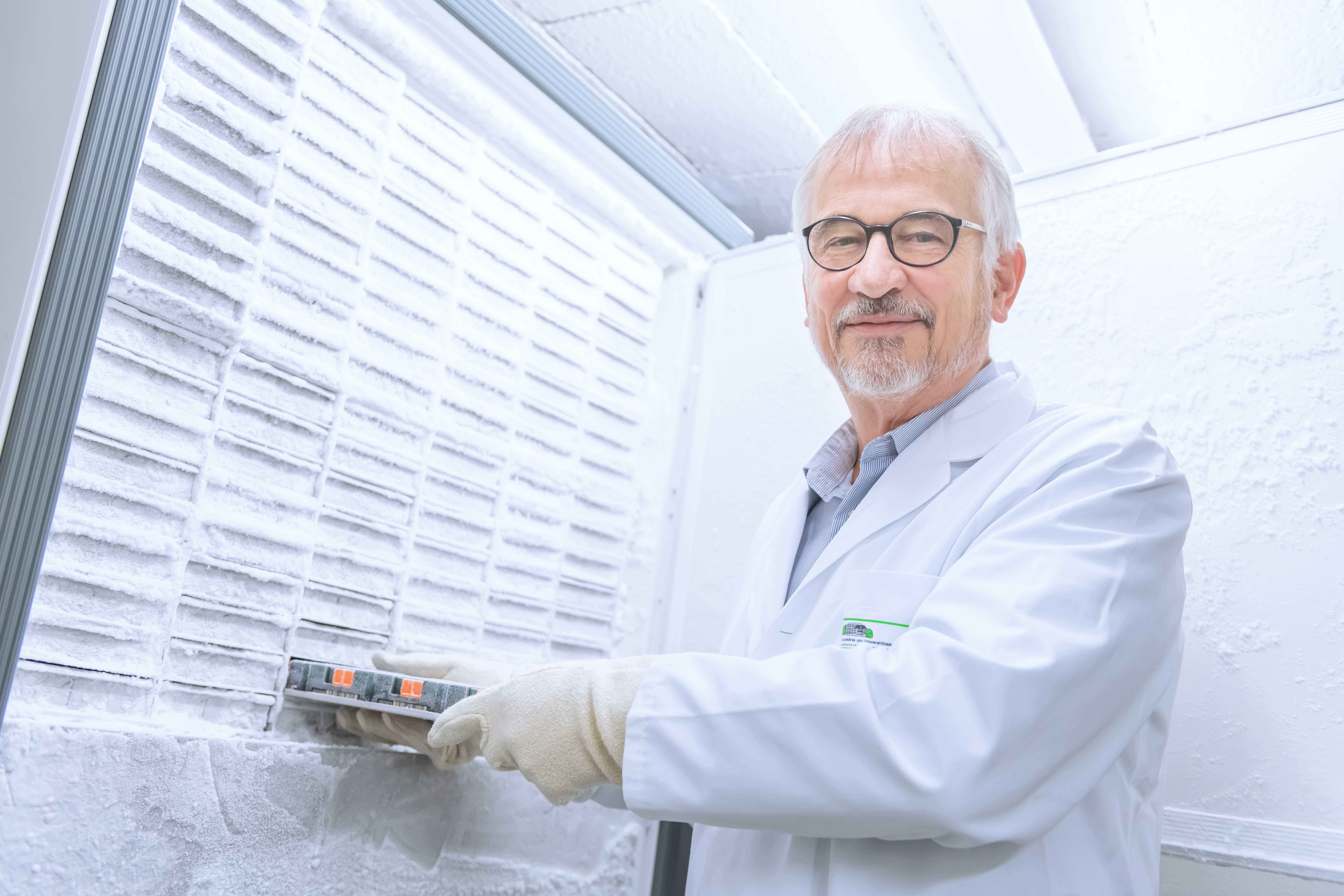
Each year, approximately 4000-5000 new samples are obtained on site, processed and stored at temperatures ranging from -80°C to -150°C. Most of these are tissue and blood samples from lung cancer patients, but about a third are biomaterials from patients with other lung diseases. The samples are donated by patients at the Thoraxklinik, where about 1100 new lung cancer patients are treated each year. Willingness to donate samples is very high - more than 90% of patients choose to provide samples for research. These are always residual tissue from surgery, or blood samples taken during regular check-ups. In addition to the samples, clinical background information on the patients, such as age, gender, smoking status and their disease course, is also recorded. "We value protecting the patients' privacy, therefore data protection and ethic aspects are our top priority," explains Thomas Muley.
The biobank team
Dr. Thomas Muley now heads a team of about 15. Since 2012, he has been supported in particular by the early career scientist Dr. Marc Schneider as biobank manager, who is committed to the diverse organizational issues of a modern biobank and will prospectively take over the management after Dr. Muley's retirement from active service. A central role is also played by the study nurses, or study assistants. They are in close contact with the patients, educate them about the sample collection process and the use of biomaterials, and accompany them throughout their treatment. Other members of the team include research assistants, data managers, technical assistants and student assistants. Medical specialists and staff from the Institute of Pathology at Heidelberg University Hospital support the biobank team by providing tissue samples, assisting with analyses and quality management.
Networking with international researchers and biobanks
Crucial for the success of the biobank is its location at one of the largest specialist lung clinics in Europe and the close cooperation with leading lung researchers at other clinics and institutes of the UKHD, the Heidelberg Medical Faculty (MFHD), the National Center for Tumor Diseases Heidelberg (NCT), and with partner institutions in Heidelberg – the German Cancer Research Center (DKFZ), the European Molecular Biology Laboratory (EMBL), the German Cancer Consortium (DKTK), researchers at the other four DZL sites, and research groups around the world.
In addition to collaborating with researchers, networking with other biobanks also contributes to the success of the lung biobank. For example, through the Biomaterialbank Heidelberg (BMBH), it is closely networked with eight biobanks in Heidelberg and with biobanks in Germany (German Biobank Alliance) and Europe (BBMRI-ERIC) and benefits from common structures such as laboratory systems and quality management support, which contributes to the high quality of the stored sample material.
The future of the lung biobank
For the future, Dr. Thomas Muley's main focus is on the further expansion of the lung biobank. "Since we will soon reach our capacity limit in terms of space, my vision is that in the future samples will be housed in a separate building with the possibility of automated sample preparation and processing," says Dr. Muley. He hopes that patients will also in the future benefit from the results of the biobank team's work. "Patients make an important contribution to everyone's health with their donations. We are very grateful to them for their high willingness to donate and will continue to work hard to ensure that the research results obtained from their samples will steadily improve the diagnosis and treatment of lung diseases," Thomas Muley states.
/ TLRC - Doreen Penso Dolfin
Photo Gallery - From the patients' sample to the research lab - Insights into the lung biobank the Thoraxklinik: