

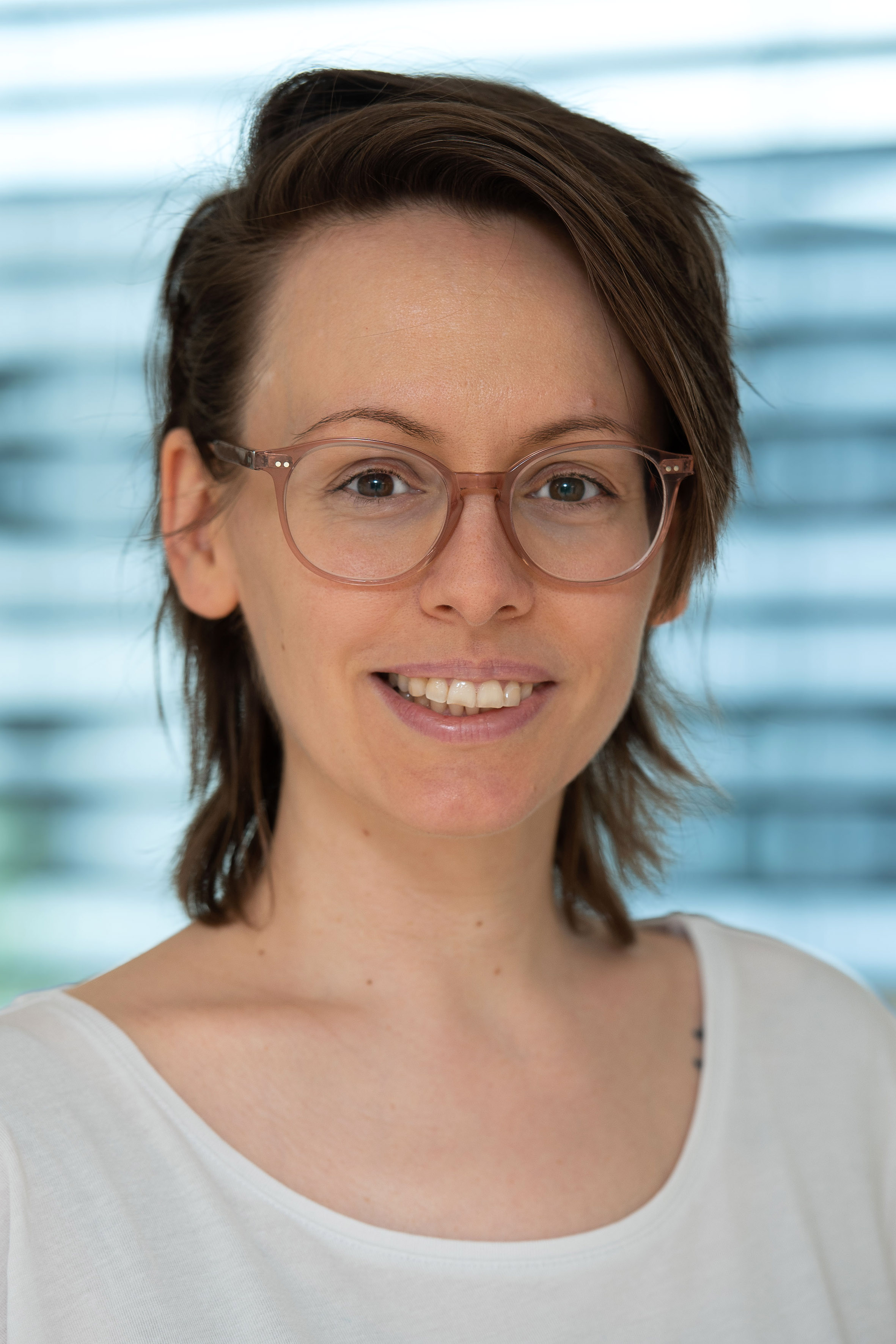
5 Questions with Ivana Mižik
Dr Ivana Mizik is DZL PI and leader of the Junior Research Group “Respiratory consequences of prematurity” in the Department of Translational Pulmonology.
1. What sparked your interest in this field of research?
At the beginning, it was accidental. My background is in molecular biology and genetics, but my MSc. thesis focused on genetics of plants, because that was the research focus at the department. In reality, I was not very interested in botany and really wanted to do my PhD thesis in biomedical research, regardless of research topic. I interviewed for a few positions and eventually took up a project offered at the Max Planck Institute for Heart and Lung Research in Bad Nauheim under the supervision of Prof. Rory Morty and Prof. Werner Seeger. The project focused on the role of extracellular matrix in the pathogenesis of Bronchopulmonary dysplasia (BPD), a chronic lung disease that mainly affects premature babies who need long-term oxygen therapy or breathing machines. It was a difficult project, but it anchored my interest in lung development and I never let go since.
2. Where would you most like to see your research make a difference?
BPD is a chronic pulmonary disease of prematurity. From a research perspective, one of the most vexing aspects of BPD is the fact that it develops largely as a consequence of life-saving treatments, which premature babies receive in the neonatal intensive care unit. With our work we aspire to identify the exact mechanisms by which BPD develops on cellular and molecular level and establish the right therapeutic targets. Ultimately, the goal is to prevent, ameliorate, or reverse the damage done to the premature lung and see more of our little patients discharged without chronic disease or lifelong consequences. I would want to see that.
3. What has changed most in the way you think about science since becoming a group leader?
The biggest change would probably be the feeling of responsibility. For the students, for their projects, their progress, for the funding. There is no one else to blame about the project when you are the supervisor. Sometimes I miss the simplicity of pipetting the whole day! Then, it's the team strategy. How can we do the thing most effectively? Which team member is the right one to do it? It can be a compelling brainteaser at times.
I have an amazing team of PhD students with complimentary skills and personalities, and I love seeing them develop and gain independence. It's great when your experiment works, but it's even better to see your student design the experiment themselves and then succeed.
4. You are the programme director of TLRCollege. What has been the most rewarding task for you so far in this role?
We had a few memorable seminars with engaging debates afterwards. It’s always rewarding to see trainees getting curious and excited during the discussion with the speaker. Good scientific practice by Dr. Leonid Schneider, Pandemic preparedness by Prof. Claudia Denkinger, or most recent Masterclass by the Rector of Heidelberg University, Prof. Frauke Melchiors, to name a few. The site visit to the EMBL Imaging Centre with Dr. Muzamil Khan and his team also drew a lot of interest. Some of the trainees approached me afterwards to share how much they enjoyed it. That’s the best reward I could wish for.
5. You undertook a postdoctoral fellowship at the Sinclair Centre for Regenerative Medicine at the Ottawa Hospital Research Institute in Ottawa, Canada. How did the research there compare to your research here in Germany?
I found that research practices in Germany and Canada are rather different. From my experience, work in Canada was more flexible and could be more spontaneous due to less complex regulations. While I am very pleased with high standards of animal welfare in Germany, simpler and faster paperwork in Canada made a big difference in conducting the animal experiments. Additionally, the concepts of life-work balance and workplace wellbeing were taken much more seriously at the time, which was rather uncommon in Europe in the pre-COVID era. On the other hand, financially it is often a struggle. I could not have continued my work there for almost three years without the stipends from the DFG. The pressure on trainees to secure ideally multiple fellowships and grants in Canada is considerable.