

The Postdoctoral Track supports postdocs, clinical fellows, and residents through a two-year programme of Masterclasses led by local and external experts. Topics include funding opportunities, grant writing, scientific writing, and other key skills for early-career researchers.
Time: Tuesday evening, 17:00 – 18:30 s.t.
Venue: Room 272/274, Frauenklinik, Im Neuenheimer Feld 440, Heidelberg
Schedule SoSe2026 and WiSe 2026/2027
| Date | Lecture title | Speaker | Venue |
| 09.04.2026 | Biometrics and statistical analysis in medical research – how to do it right? | Stella Erdmann (UKHD) | Lecture Hall n. 272 |
| 12.05.2026 | Side Visit EMBL | - | - |
| 02.06.2026 | What’s next? Reflections on a career track in academia | Frauke Melchior (Heidelberg University) | Lecture Hall n. 272 |
| 06.10.2026 | What the DFG looks for in a grant application - funding opportunities for postdoctoral researchers | Lea Berg (DFG Head Office) | Lecture Hall n. 272 |
| 03.11.2026 | Sustainability in research - environmentally aware scientific research | Noemi Bender (Heidelberg University) | Lecture Hall n. 272 |
| 01.12.2026 | Becoming a research group leader | M. Alejandre-Alcazar (UGMLC/Cologne University ) | Lecture Hall n. 272 |
| 12.01.2027 | DZL4 review and DZL 5 | Hans-Ulrich Kauzsor (TLRC) | Lecture Hall n. 272 |
| 09.02.2027 | Use of AI in research and medical care | Felix Sahm (UKHD/Health + Life Science Alliance) | Lecture Hall n. 272 |
Next expert speaker, Masterclass series 2026/2027
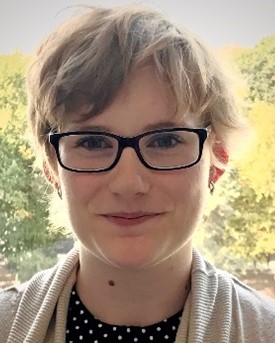
What the DFG looks for in a grant application - funding opportunities for postdoctoral researchers
Dr. Lea Berg, PhD
Programme Officer, DFG Head Office, section Life Sciences 3: Medicine
Dr. Berg received a PhD from Molecular Medicine from the University of Bonn where she further trained as a postdoctoral researcher at the Institute of Reconstructive Neurobiology. Since 2024 she joined the Head Office of the Deutsche Forschungsgemeinschaft (DFG) as a Programme Officer. As a part of her position, Dr. Berg facilitates the DFG outreach to the scientific community, particularly providing the support to early career scientists.
Previous Speakers 2026

What’s next? Reflections on a career track in academia
Prof. Dr. Frauke Melchior, PhD
Rector, Heidelberg University, term 2023-2029
Dean, Faculty of Biosiences, Heidelberg University, 2016-2018
Professor, Molecular Biology, Heidelberg University
Prof. Melchior received her PhD in chemistry from the University of Marburg, followed by postdoctoral fellowships at the Max Planck Institute for Biophysical Chemistry in Göttingen and Scripps Research Center in La Jolla, California. She later led research groups at the Max Planck Institute of Biochemistry in Martinsried and at the University of Göttingen. Since 2008 she is a professor at the Center for Molecular Biology Heidelberg (ZMBH) and since 2023 serves as a Rector of the Heidelberg University. Prof. Melchior discovered the SUMO (Small Ubiquitin-like Modifier) protein family Her research group focuses on characterizing SUMO proteins and the role of SUMOylation in post-translational protein modifications.

Biometrics and statistical analysis in medical research – how to do it right?
Dr. Sc. hum. Stella Erdmann
Head of Statistical Modelling Group, institute of Medical Biometry, University Heidelberg
Member of the Ethics Committee, Heidelberg Faculty of Medicine
Dr. Erdmann received her Bachelor and Master training in Mathematics and Biology at the Johannes-Gutenburg-Univerity in Mainz. In 2020 she obtained a PhD in Medical Biology from the University of Heidelberg, where she currently leads a Statistical Modelling Group. Her research focuses on innovative study designs and systematic use of the real-world data (RWD) with modern statistical methods to make reliable causal statements about the effects of interventions in healthcare. Additionally, she performs statistical planning and supervision of research projects and biometric counseling. She teaches the Block IV in HeiCuMed and in the Master's program in Medical Biometry/Biostatistics
Previous Masterclasses
| Date | Lecture Titel | Speaker | Venue |
| 01.04.2025 | Ethics/Good scientific practice, or the art of speaking up. | Leonid Schneider (For Better Science) | Seminar room n. 274 |
| 29.04.2025 | Biobanks and how to use them | Mark Schneider (TLRC) | Seminar room n. 274 |
| 03.06.2025 | Experimental animal research and animal welfare | Verena Rickert-Zacharias (TLRC) | Seminar room n. 274 |
| 07.10.2025 | Whats next? Part I: Career track in industry | Matthew J. Thomas (Boehringer Ingelheim) | Lecture hall n. 272 |
| 11.11.2025 | Funding opportunitites within the ERS | Agnes Boots (ERS) | Seminar Room n. 274 |
| 02.12.2025 | Article writing and publishing | Rory Morty (TLRC) | Lecture Hall n. 272 |
| 03.02.2026 | Local funding opportunities | Dr. Ina Biermayer (med. faculty Heidelberg) | Seminar Room n. 274 |
Local funding opportunities
Dr. rer. nat. Ina Biermayer Grants Officer (Research Dean's Office Medical Faculty Heidelberg), German Federal Funding, Clinician Scientist Program, Medical Scientist Program, EU Funding (MSCA/ERASMUS+)
Dr. rer. nat. Anja Köhler Grants Officer (Research Dean's Office Medical Faculty Heidelberg), German Centers for Health Research (DZG), Gender Equality Measures, German Federal Funding
Dr. Ina Biermayer and Dr. Anja Köhler are research officers in the Dean's Office for Research (Forschungsdekanat) at the Faculty of Medicine of Heidelberg University. The Faculty of Medicine offers a variety of short- and long-term funding programs for medical scientists, clinicians, and medical data scientists at various career stages. These programs support both basic and clinically oriented research projects. A particular focus of the funding measures is on equal opportunities.
Academic publishing: Navigating peer review on your own for the first time
Prof. Dr. Rory E. Morty
Professor and Chair, Department of Translational Pulmonology, UKHD, Heidelberg (Germany), Chief Editor European Respiratory Reviews, TLRCollege Chair
Prof. Morty is the Chair of the Department of Translational Pulmonology at the UKHD. Prof. Morty was born and educated in South Africa, completed a Fellowship in Infectious Disease at Yale University School of Medicine in New Haven U.S.A., and was then recruited to the Department of Pulmonology at the University of Gießen School of Medicine. After a 10-year stint as Group Leader at the Max Planck Institute for Heart and Lung Research, Prof. Morty was recruited as Department Chair at the UKHD. For the purposes of explaining peer review in the lung science/pulmonary medicine arena to our audience, Prof. Morty brings with him his experience as former Editor-in-Chief of the American Journal of Physiology-Lung Cellular and Molecular Physiology, current Associate Editor of Physiological Reviews, and current Chief Editor of the European Respiratory Review, as well as his experience as former Committee member and current Chair-elect of the Publications Committee of the American Physiological Society.
What the European Respiratory Society looks for in a grant application
Asst. Prof. Dr. Agnes Boots, PhD.
Fellowships and Awards Director-elect, European Respiratory Society
Assistant Professor, Faculty of Health, Medicine and Life Sciences, the Netherlands
Dr. Boots completed her PhD at the Maastricht University, the Netherlands and later received the prestigious RESPIRE1 Marie Skłodowska-Curie fellowship to conduct research in Burlington, USA and University of Düsseldorf, Germany. Currently, she is an assistant professor at the Department of Pharmacology and Toxicology of Maastricht University. Dr. Boots’ research interests include oxidant-related lung damage and the use of volatile organic compounds to diagnose and monitor lung diseases. She is the European Respiratory Society (ERS) Fellowships and Awards Director-elect and a member of the ERS Science Council.
What’s next? Reflections on a career track in industry
Prof. Dr. Matthew J. Thomas, PhD
Head of Immunology & Respiratory Research at Boehringer Ingelheim, Germany
Visiting Professor at Department of Life Sciences at University of Bath, United Kingdom
At Boehringer Ingelheim, Dr. Thomas leads a department focused on discovering therapeutics for lung repair and regeneration. His extensive experience in respiratory research includes study of pulmonary arterial hypertension, idiopathic pulmonary fibrosis, cystic fibrosis, asthma and chronic obstructive pulmonary disease. His work in drug discovery spans from target finding, pathways investigation, pathophysiology, translational pre-clinical systems/biomarkers and the route into patients. Additionally, Dr. Thomas has served as member and leader of several international multi-disciplinary pharmaceutical research teams.
Experimental animal research and animal welfare: How to get your animal experimental proposal accepted in the first round!
Dr. Verena Rickert-Zacharias, PhD
Scientific Coordinator, Department of Translational Pulmonology & Institute for Human Genetic, UKHD, Heidelberg, Germany
Dr. Rickert-Zacharias received her PhD from the University of Heidelberg in collaboration with the EMBL (Heidelberg) in 2019. She transitioned from postdoc to Scientific Coordinator of the Department of Translational Pulmonology at UKHD in 2021, and in 2022 also joined the Institute for Human Genetics at the UKHD, where she participates in diagnostics and variant analysis for the Molecular Tumor Board (MTB) in Heidelberg, Mannheim and Heilbronn.
DZL Biobanks: What biological material is where, what can I use it for, and how do I get it?
Dr. Marc Schneider, PhD
Biobank Manager, Lung Biobank Heidelberg
Translational Research Unit, Thoraxklinik, Heidelberg, Germany
Dr. Schneider received his PhD in virology at University Medical Center Mainz in 2011. He joined the Translational Research Unit (STF) at Thoraxklinik in 2012, where he currently manages the Lung Biobank Heidelberg. The main emphasis at the STF and the Lung Biobank Heidelberg is interdisciplinary support and promotion of translational lung research projects. Additionally, the STF offers a broad methodological spectrum (such as gene expression analyses, primary cell culture models) to support research projects within and beyond the DZL.
Ethics in science and good scientific practice, or the art of speaking up
Dr. Leonid Schneider, PhD
Independent science journalist and cartoonist, For Better Science
Dr. Schneider received his PhD in biology at the University of Düsseldorf in 2008 and conducted research in cell biology, stem cells and cancer at University of Cologne, the Fondazione Istituto FIRC di Oncologia Molecolare in Milan, Technical University Darmstadt and MPI for Polymer Research. Since 2015, he works as an independent science journalist and is best known for his blog For Better Science, which covers research integrity and ethics, especially in the biomedical sciences and gives a voice to concerned scientists unable to openly speak out elsewhere.